

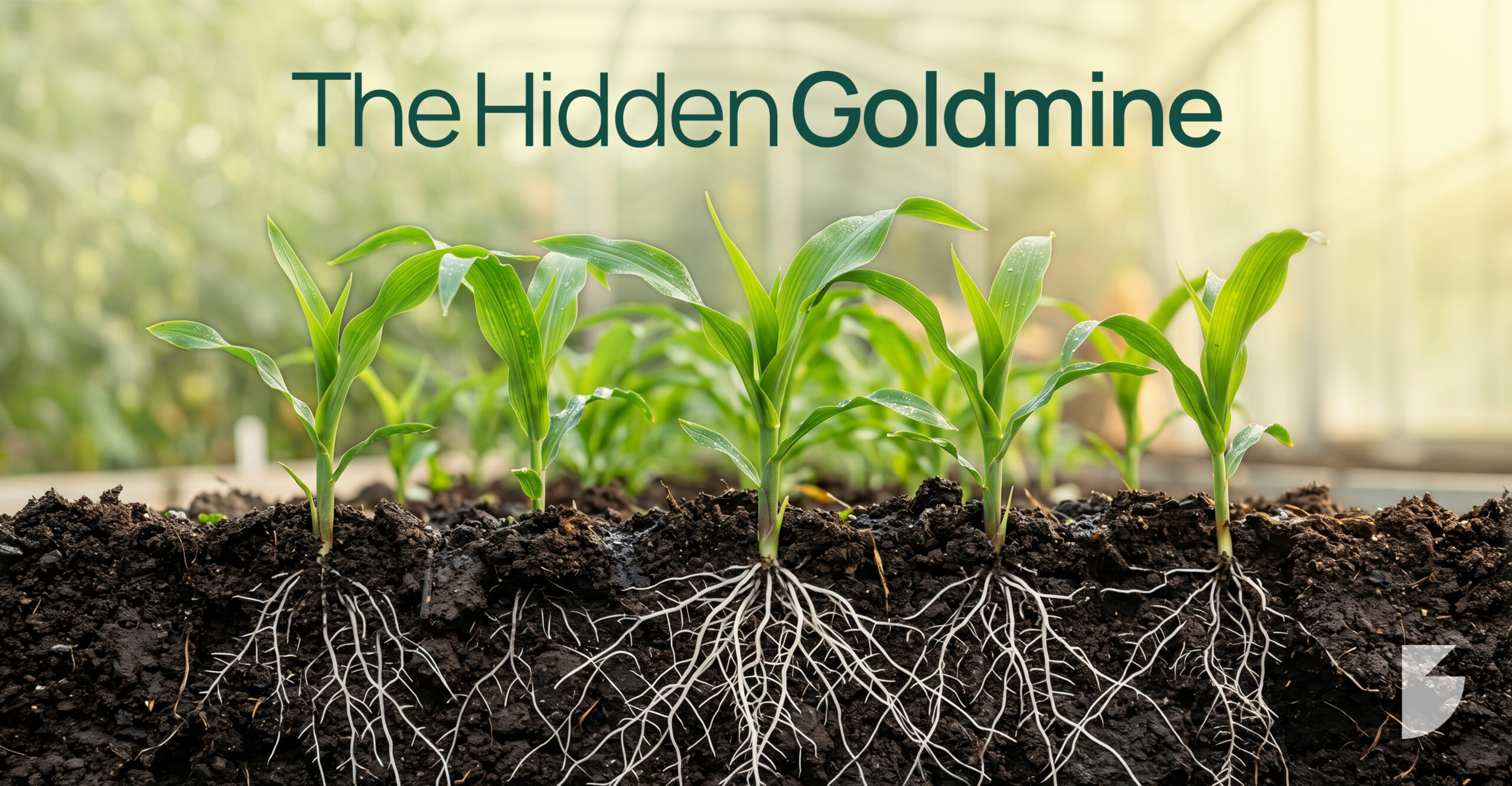
Fertilizer is one of the biggest costs in farming today.
Every season, farmers spend more on inputs, expecting better crop growth. But when the soil is weak, fertilizer alone cannot give the right result.
Healthy soil is the real foundation of profitable farming.
When soil has good organic matter, proper moisture, strong roots, and active microorganisms, crops can absorb nutrients more efficiently. This means less wastage, better fertilizer performance, and lower input pressure over time.
In many farming conditions, improving soil health can help reduce unnecessary fertilizer dependency by 30–40%, depending on crop type, soil condition, irrigation method, and nutrient planning.
Why Healthy Soil Matters
Weak soil does not hold nutrients properly.
Because of poor soil structure, low organic matter, over-irrigation, or nutrient imbalance, a large part of applied fertilizer may not reach the crop effectively.
Healthy soil helps farmers:
- Improve nutrient absorption
- Reduce fertilizer wastage
- Hold moisture for longer
- Support stronger root growth
- Improve microbial activity
- Build long-term crop strength
The goal is not to stop using fertilizer.
The goal is to make every rupee spent on fertilizer work better.
The Water and Fertilizer Connection
Fertilizer efficiency depends strongly on water management.
Too much water can wash nutrients away from the root zone. Too little water can stop nutrients from reaching the roots. Uneven irrigation can create uneven crop growth even when fertilizer is applied.
This is where smart irrigation becomes important.
Drip irrigation helps deliver water near the root zone, where crops actually need it. With proper moisture, nutrients move better, roots absorb better, and fertilizer wastage reduces.
Better water management means better fertilizer performance.
How Farmers Can Improve Soil Health
Farmers can improve soil health through simple but consistent practices:
- Regular soil testing
- Adding organic matter
- Using drip irrigation
- Practicing mulching
- Avoiding over-irrigation
- Applying fertilizer based on crop and soil need
These steps help build a stronger root zone and reduce unnecessary input loss.
Healthy Soil Means Better Profitability
Farm profit is not only about higher yield.
It is also about reducing avoidable cost.
When soil becomes healthier, crops respond better, fertilizer works better, and resources are used more efficiently. This makes farming more stable, sustainable, and profitable.
At Bhumi Irrigation, we believe better farming starts with better systems.
Water, soil, nutrients, and crop growth are all connected. With smart irrigation, drip systems, mulching, and water management solutions, farmers can support healthier soil and better input efficiency.
Because when soil performs better, farming becomes stronger.
Healthy soil means lower input cost.
Healthy soil means better fertilizer efficiency.
Healthy soil means better farming.
And for the future of agriculture, healthy soil is the real hidden goldmine.