

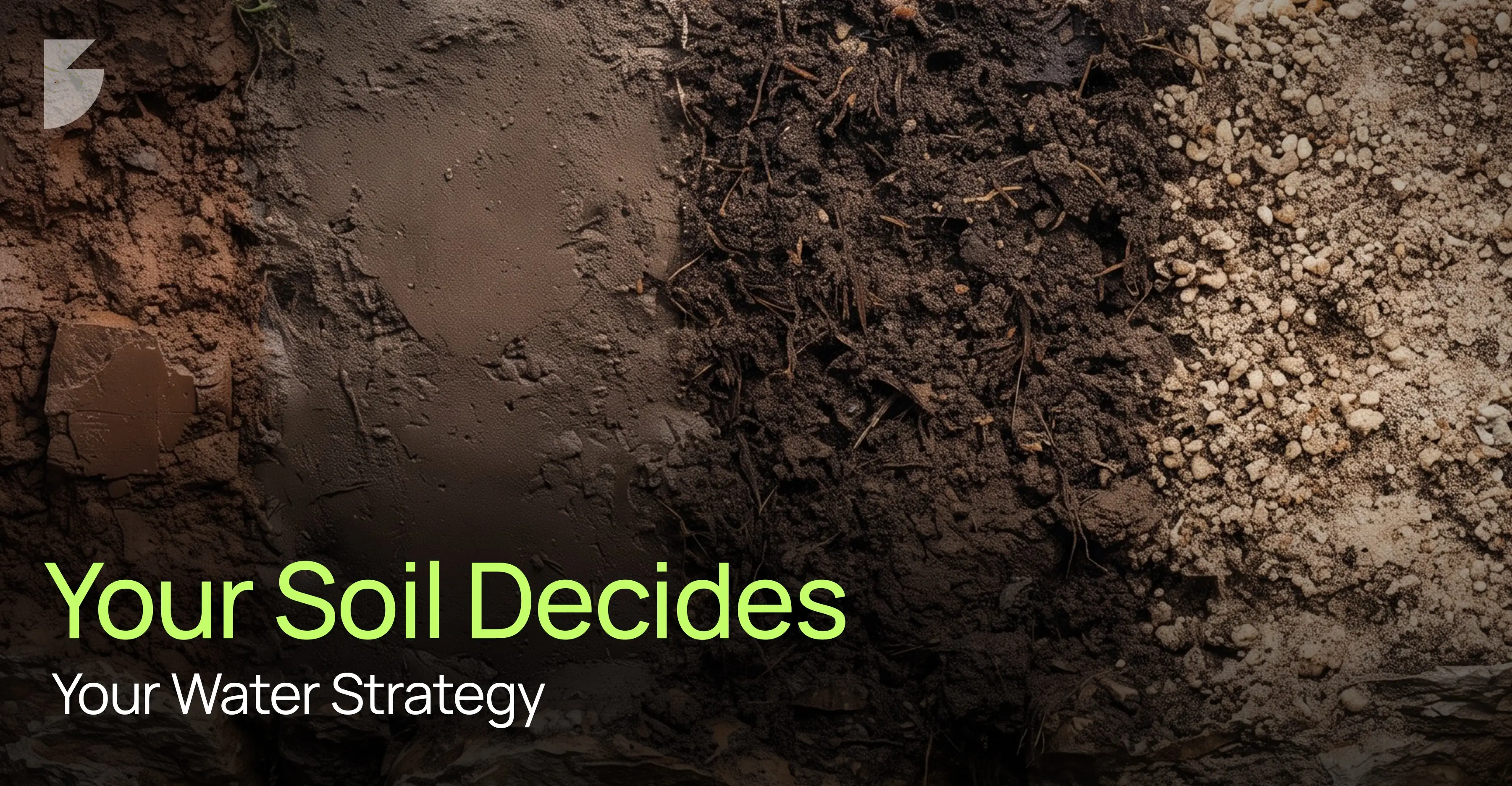
Every field is different.
And one of the biggest differences begins with soil.
Before choosing any irrigation system, farmers should first understand their soil type. The way soil holds water, drains water and supports roots decides how irrigation should be planned.
Irrigation is not only about giving water to the field. It is about giving water in the right quantity, at the right time and in the right way.
If irrigation is planned without understanding soil, the crop may get too much water in some areas and too little in others. This can lead to water wastage, weak root growth, nutrient loss and uneven crop growth.
That is why a strong irrigation strategy should always begin with soil understanding.
Why Soil Type Matters
Different soils behave differently with water.
Sandy soil allows water to pass quickly. Because of this, water does not stay near the root zone for long. Sandy soil needs frequent but controlled irrigation so that water reaches the crop without getting wasted.
Clay soil holds water for a longer time. If too much water is given, it can lead to waterlogging and affect root health. Clay soil needs careful water management with proper irrigation intervals.
Black soil can hold moisture well, but excess water can create problems if drainage is poor. Farmers should plan irrigation based on crop stage, moisture condition and field layout.
This is why one irrigation method does not work the same way for every field.
Irrigation Should Match the Soil
For better crop growth, water should reach the root zone in the right quantity.
Drip irrigation can help where controlled water delivery is needed. Sprinklers and mini sprinklers can support crops that need wider coverage. Pipes, filters and valves should also be selected based on field condition, water source and pressure requirement.
When the irrigation system matches the soil, farmers can manage water more effectively.
It helps water reach where the crop needs it most and reduces unnecessary wastage.
Benefits of Soil-Based Irrigation Planning
Soil-based irrigation planning helps farmers use water better.
It can help reduce water wastage, improve moisture balance, reduce unnecessary labour and support better crop management.
It also helps farmers avoid problems like over-irrigation, dry patches, pressure issues and uneven crop growth.
When farmers understand their soil, they can choose the right irrigation method, plan water flow better and make every drop more useful for the crop.
Conclusion
A strong irrigation strategy starts with understanding the soil.
Before installing any irrigation system, farmers should study their soil, crop, water source and field layout. Because the right irrigation decision is not the same for every farm.
Some fields need controlled water delivery. Some need wider water coverage. Some need better drainage planning. Some need better pressure management.
That is why soil should come first and irrigation should come next.
Soil First. Irrigation Next.
For the right irrigation solution, connect with Bhumi today.
📞 +91 99099 98184